If we know that kids learn when it’s fun and interesting;perhaps it’s time to rethink how we teach it!
Story-based lessons for kids ages 5–13 that explain school subjects in new ways and help them navigate the situations that come with growing up.
Sample Episodes
What Does Your Child Need to Know Right Now?
Maybe it's a science concept that hasn't clicked. Maybe it's a friendship that's suddenly gotten complicated.
We start with questions that matter to kids and build stories around them. By connecting new ideas to familiar experiences, we give children something they can picture, think through, and make sense of for themselves.
The Animal Cell Factory
The cell is a factory, and every organelle has a job. Follow the mix-ups on the assembly line and see how the parts work together.
How Do I Say No Without Making It Weird?
A simple favor can get complicated when you don't want to disappoint someone. This story shows kids how to say no and respect their own boundaries.
Why Do I Feel Ugly?
Picture day has Maya questioning how she looks. Her story explores where those feelings come from and whose opinions deserve a place in her head.
A little Life Lab, on us.
Start with Abuela Rose's Sunlight Kitchen and see how a story about making soup becomes a lesson on photosynthesis.
Watch it together or let your child explore on their own. We'll share more free lessons as they're released.
Free lessons as they're released. Unsubscribe anytime.
There's more to growing up than getting good grades.
We spend years teaching children how to answer questions on tests.
Meanwhile, they're dealing with things no test prepares them for: a friend who turns mean, a boundary they don't know how to set, embarrassment, pressure, responsibility, and decisions they're not ready to make.
And even in the subjects we do teach, children are often measured by how well they fit the traditional classroom model.
Sit still. Follow along. Keep up. Raise your hand. Don't interrupt. Finish on time.
When a child doesn't learn well under those conditions, we're quick to tell them to focus harder, try harder, or catch up. Sometimes the conversation turns to diagnosis and medication while the teaching model itself goes largely unquestioned.
We don't spend nearly enough time asking whether the lesson could be taught differently, in a way that better suits how that child learns.
That's the thinking Life Lab challenges.
A child shouldn't have to understand something the first way it's explained. We can show them, tell a story, try another example, answer their questions, and find an approach that holds their interest.
Kids are expected to navigate life before anyone has taught them how.
Your child doesn't get much warning before a friendship turns difficult, someone pressures them to do something, or they need to solve a problem without you.
They learn how to respond from whoever happens to be around, from social media, or from what happens after something goes wrong.
And sometimes the first time you realize they needed help with something is when they're already upset about it.
Wouldn't it be better to have some of those conversations before they're needed?
Imagine having somewhere to start.
When a school subject isn't clicking, you have a different way in: a story or real-world example that connects the new idea to something your child already knows. That connection can help it make sense — and make it easier to remember.
When a friendship gets complicated, there's a story you can watch together and talk about afterward.
And when your child comes across something new, they have a place to explore it without the pressure of getting everything right the first time.
You won't have every answer ready. You don't need to. Sometimes having a good place to begin makes all the difference.
The Solution
Meet Taylor Method Life Lab.
A place for kids to practice life before life happens.
Life Lab is a growing library of educational videos built around the questions kids bring home — and some they haven't thought to ask yet.
We take an academic concept or an everyday situation and give it a story worth following, along with an explanation that makes sense.
Your child gets to see the idea play out, understand why it matters, and come away with something useful: words to try, a strategy to remember, or another way to think about the problem.
We call those takeaways Taylor Method Tools.
But the important part isn't what we call them. It's what your child can do with what they've learned.
Sound Familiar?
Why is it so hard for me to get started?
What do I do when someone is being bullied?
Why do I feel ugly?
What if I get lost?
How do I tell someone no without hurting their feelings?
Why doesn't this make sense to me?
How It Works
We don't just tell kids what to do. We show them what it looks like.
A story gives kids a reason to pay attention. A good explanation helps them understand. And a useful takeaway gives them something to remember when the video is over.
01
Engage
Give them a reason to care.
Start with a character, a problem, or a question that makes kids want to know what happens next.
02
Explore
Show them how it works.
Use the story, animation, and clear examples to explain what's happening and why.
03
Anchor
Make the important part memorable.
Introduce a simple phrase, a strategy, or a few steps kids can remember. That's the TM Tool.
04
Integrate
Bring it into everyday life.
Help kids recognize where the idea applies, whether that's a conversation, a decision, or a school subject they'll encounter again.
Knowing the answer is one thing. Understanding when and how to use it is another.
What Counts as a Life Lesson?
Five areas. A whole lot of growing up.
One day your child needs help understanding a science concept. The next day they're trying to figure out whether to stand up for a friend. Before long, they're learning to manage their time, make decisions, and do more things for themselves. These might seem like completely different subjects. But they're all part of the same thing: growing up. Life Lab brings them together in five areas, so your family can explore what matters now and discover things you might not have thought to teach yet.
Me
Growing up means forming opinions about yourself, sometimes before you understand where those opinions came from. We explore confidence, feelings, identity, motivation, and the way kids talk to themselves.
My People
Friendships can get complicated quickly. We explore boundaries, communication, conflict, bullying, and the decisions kids face when other people are involved.
My Home
Independence starts with everyday things. Learning to manage routines, prepare food safely, care for a space, and handle responsibilities helps kids take a more active role at home.
My Life
Some situations don't come with instructions. We explore safety, decision-making, money, unexpected problems, and the practical judgment children develop as they become more independent.
My Education
Sometimes all it takes is another way of explaining something. We approach math, science, reading, and other school subjects through stories, visuals, and examples that make difficult ideas easier to follow.
What We Talk About
Some questions are easier to explore with a story.
Cells, friendships, confidence, fractions — they may not have much in common, but they're all things children are trying to make sense of. Here are a few examples of how Life Lab approaches them.
How Do Plants Make Their Own Food?
Abuela Rose needs to make Sunlight Soup, but the recipe is a little unusual. Her kitchen becomes a way to understand sunlight, water, carbon dioxide, and how plants produce glucose.
How Do I Say No Without Making It Weird?
Sometimes being kind and being honest can feel like two different things. This story helps kids think about their boundaries and how to respond when someone asks for more than they want to give.
Why Do I Feel Ugly?
Picture day can bring up a lot of feelings about appearance and comparison. Maya's story opens up a conversation about self-image and the voices that influence how children see themselves.
Why It Feels Different
This isn't a rulebook for being a "good kid."
There's a right answer to a percentage problem.
There isn't one perfect sentence that works in every friendship.
We don't teach those two things the same way.
For academic subjects, we find a fresh way to explain the concept and show how it works.
For everyday life, we let kids see a situation unfold, consider the people involved, and work through a response they might not have considered on their own.
The goal isn't to hand children a script for every problem. It's to help them understand enough to make thoughtful decisions of their own.
We don't tell kids what to think. We show them what to consider, so they can decide for themselves.
What Families Get
More understanding for them. More ways for you to help.
Life Lab doesn't replace the conversations you have with your child. It gives you more to work with when those conversations happen.
For Kids
- ✓Another explanation when something hasn't made sense
- ✓Words for situations that are difficult to talk about
- ✓Practical ideas to try when problems come up
- ✓Stories that help them consider different choices
- ✓Lessons they can revisit without starting from scratch
For Parents
- ✓A way to begin conversations that aren't always easy
- ✓Another approach to a school subject that's causing frustration
- ✓Real situations to discuss without another lecture
- ✓Topics you may not have realized your child needed help with
- ✓A growing library to use as your child's needs change
You don't need to know every question your child will ask next. It's helpful to know where you can start looking for an answer together.
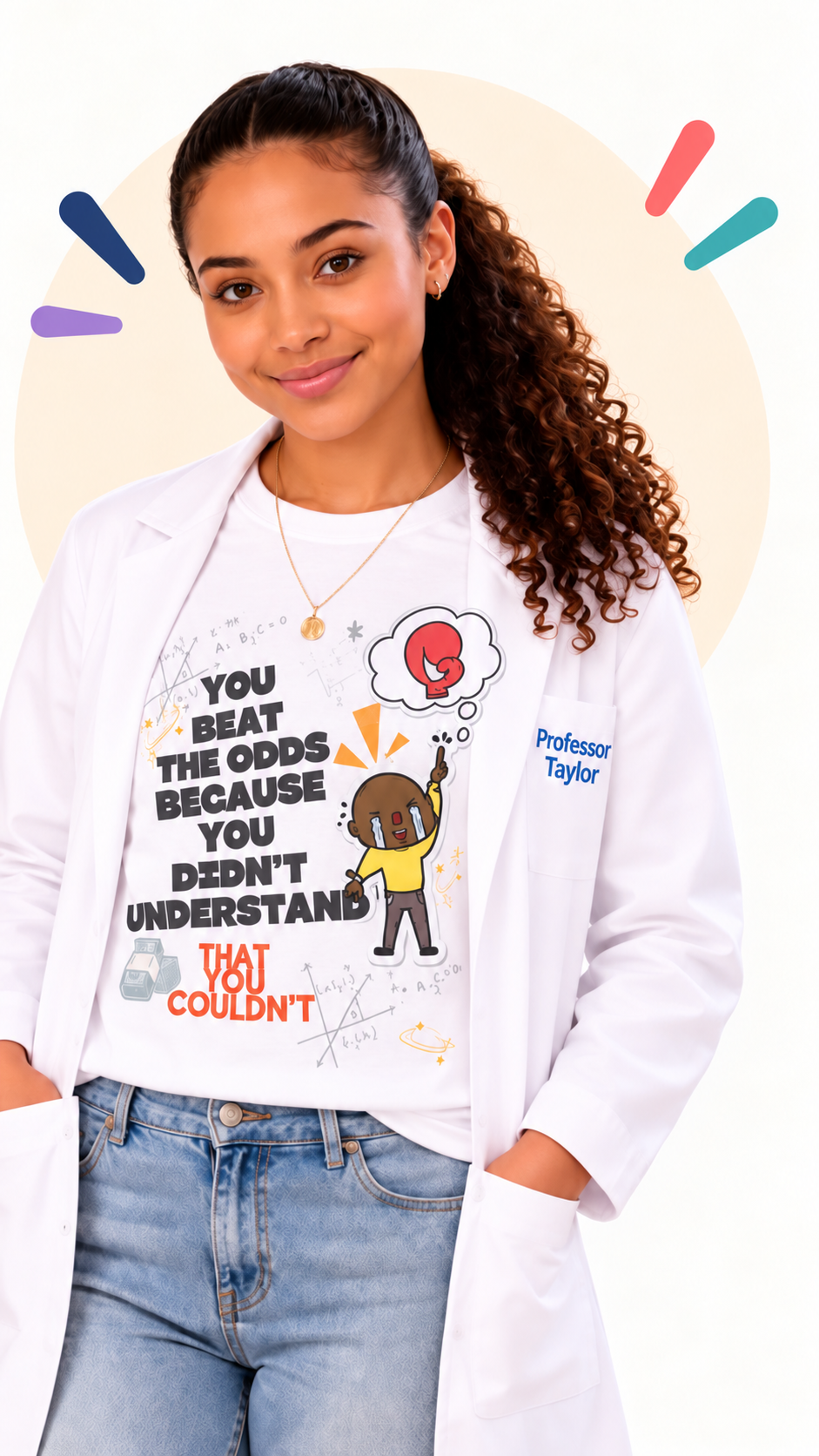
Who's Guiding the Experiments?
Meet Professor Taylor
Professor Taylor is the familiar face who welcomes kids into each Life Lab lesson and helps bring the important ideas together at the end. The character comes from the teaching approach developed by Life Lab founder Sierra Taylor.
Sierra is a University of Michigan graduate with five years of experience educating children in a variety of settings. Most recently, she has worked as a special education teacher at one of New Jersey's leading private schools. Her work with children also includes kids' yoga, mindfulness, breathwork, and years of creative teaching. Before moving fully into education, she spent 14 years as a professional cake decorator, with work appearing on Netflix and Food Network.
Sierra's daughter, Emma, was the original inspiration behind the Taylor Method way of teaching. Sierra homeschooled her through age 10, adapting learning to the way Emma actually understood and processed information. Today, Emma is an honors high-school student with a 4.33 GPA and a competitive volleyball player.
Life Lab brings together two things Sierra has spent years working with: children and creative ways to help them understand.
Read Sierra's full story →Stay in the Loop
There's always another question worth exploring.
Get free Life Lab lessons and updates when new videos are released. A little more learning for your family, without another assignment to keep up with.
FAQ
Questions? We've Got You.
Here's what to know before getting started.
Contact / Support
How can we help?
Have a question about your membership, a lesson, or Taylor Method Life Lab? Send our team a message using the form below.
There's a lot more to learn than what's on the test.
And more than one way to teach it. Explore the Life Lab library or start with a free lesson. Your child's next question might be a good place to begin.